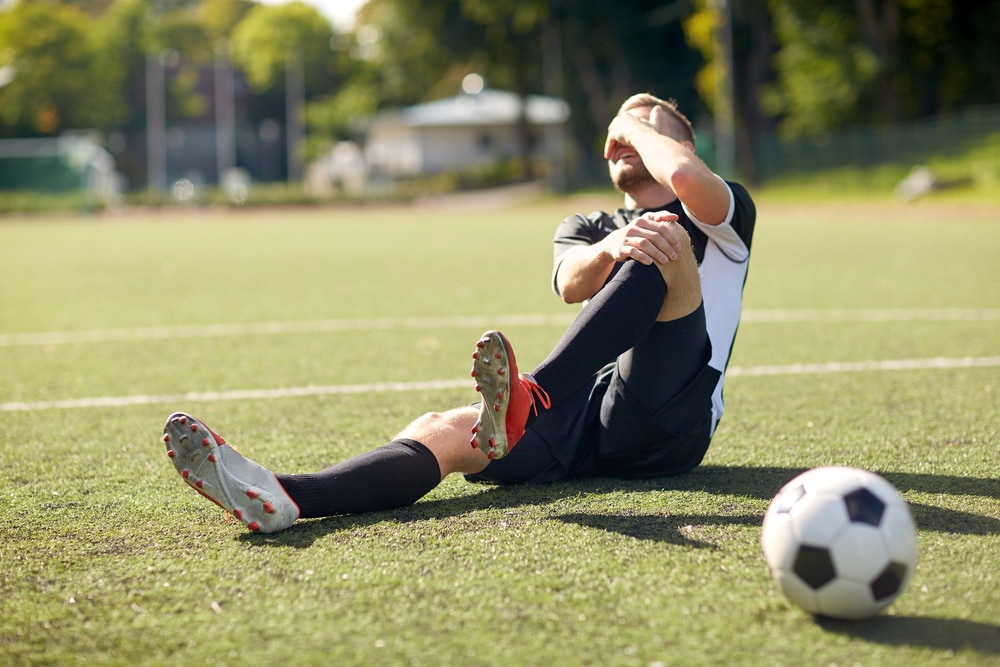
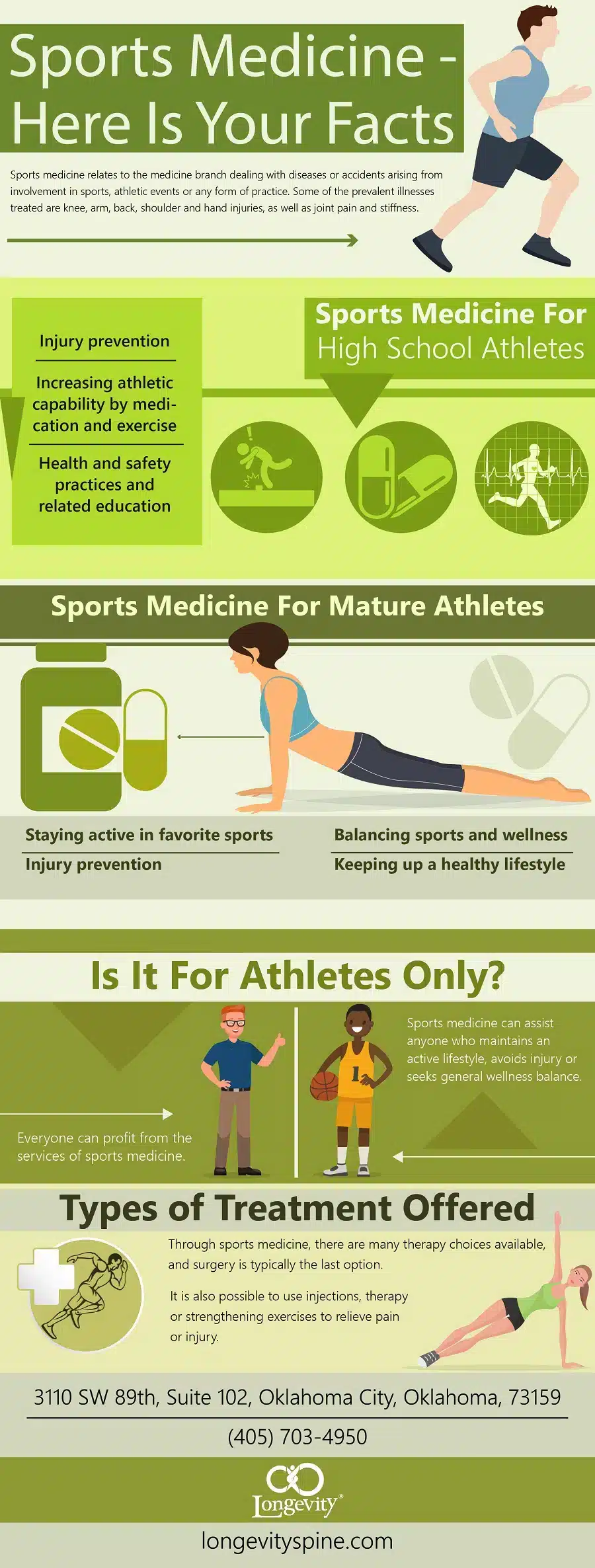
Sports and injuries are tightly linked. Many sports also involve injury to kids, teenagers, and adults. For all sports and exercise, professional monitoring is recommended to prevent minor injuries and more serious ones. Get stats on sports accidents, prevalent injury-prone sports, and the use of sports medicine in this infographic.

One of the fastest ways to put a talented athlete on the shelf is through injury. When you unexpectedly stretch a muscle too far, you can injure it. On a sports field or in your own backyard, this can happen. What should you do if you’ve just sustained an injury while participating in sports? Many people would rush to the hospital or doctor’s office to get rid of any lingering anxieties. The recovery process can be sped up by following a few simple guidelines.
Fractures, sprains, strains, spinal misalignment, torn ligaments, and cartilage or nerve damage are among the most common sports injuries. In order to get to a doctor who specializes in sports-related injuries and can prescribe sports medicine, you need to look for a chiropractic clinic that focuses on such treatments.
With a few helpful tips, most of these injuries can be managed until a doctor or sports medicine practitioner is available.
What Steps Must You Take as a Preliminary Treatment?
- Prevention – Protecting the injured tissues from further damage is essential after a sports injury. Bandages, wraps, and splints can all be used to accomplish this.
- Adequate Rest – Injuries require time to heal, and this is an unspoken rule. Make sure you don’t overexert yourself by ignoring your body’s signals and instead pushing it to its limits. Recuperation can have numerous positive effects on both the injury and the body as a whole.
- Ice & Heat – Many sports injuries can be effectively treated with ice and heat. The anti-inflammatory properties of ice are well known. It can help alleviate pain and swelling when applied. As soon as possible, the injury should be treated with ice or a cold pack. For about three days, repeat this procedure. A heating pad can be used in the same manner as a cold compress to treat the sore spot.
- Compression – Applying pressure to an injured area with an elastic bandage or wrap will help reduce swelling and inflammation. Wrapping the injury too tightly can lead to a decrease in blood flow, so be careful not to do so.
- Elevation – A pillow or hassock can help drain fluid from an injury and reduce swelling, pain, and inflammation by keeping it elevated.
- Medication – Some people take anti-inflammatory or pain-relieving medications. Pain and discomfort can be lessened by following the steps outlined above, however.
- Rehabilitation – The process of regaining your pre-injury physical condition is a lengthy one. For rehabilitation, incorporate resistance bands or light weights. Injured tissues will benefit from this by being rebuilt and strengthened.

Benefits of Sports Medicine
Some sports medicine benefits are listed below-
- Preventative Care – Sports medicine is not only focused on rehab. Preventive maintenance plays a pivotal role in this field. It will adequately help you train your body and boost your energy skills with the aid of sports medicine. With the assistance of sports medicine, you regain your body strength, which will help prevent potential injuries.
- Proper rehabilitation – Sports medicine can be beneficial for any injuries. During restoration, sports medicine will help the injured area heal correctly. There are some other therapies, including massage therapy and occupational therapy. After the injury, sports medicine rehabilitation can help you improve your athletic performance. Besides that, sports medicine can revamp your muscles and prevent muscle fatigue.
- Personal training – With the aid of sports medicine, you will get the opportunity and benefit as an athlete. Besides taking sports medicine, if you are under the guidance of a sports trainer, it will help you get to the top and reach your goals.
Musculoskeletal Injury Expertise
Sports medicine specialists have considerable musculoskeletal medicine training and are thus well-equipped to deal with these issues. While orthopedic surgeons specialization in the operative musculoskeletal injury treatment, sports medicine professionals are capable of accurately diagnosing and treating these injuries non-operatively. Because non-surgical musculoskeletal injuries account for nearly 90% of all musculoskeletal injuries, this benefits the vast majority of the active population. Acute ankle, shoulder, and knee injuries, muscle strains, joint dislocations, and overuse ailments like stress fractures and tendonitis are all common musculoskeletal disorders.
If an injury necessitates surgery, sports medicine specialists can quickly connect you with the appropriate surgical specialty for treatment.
Athletes aren’t the only ones who benefit from sports medicine.
Non-athletes can also benefit from sports medicine professionals, who are fantastic resources for anyone who wants to get active or start an exercise regimen. The same expertise used to treat competitive athletes can be employed to get them back to full function as quickly as possible. Sports Medicine Specialists were also trained in the diagnosis and non-surgical treatment of arthritis and osteoporosis, as well as lowering the risk of fracture in those who were affected.
Injuries and their types
Sports-related or overuse injuries can affect the bones, joints, and soft tissues. The foot, knee, hip, ankle, and shoulder are some of the most commonly affected locations. Other difficult places include the hand, neck, and wrist.
Participating in sports can result in a variety of injuries, including fractures, dislocations, strains, and sprains, as well as tendonitis, a runner’s knee, bursitis, tennis elbow, and other conditions. Injuries can occur at any time, but basketball, football, soccer, hockey, and baseball are among the most common sports in which they occur.
Prevention
A sports medicine professional, such as those on our medical team, can also provide advice on how to stay strong and perform better. Warm-up, cool-down, and stretches are all covered, as well as the necessity of paying attention to your body. Tips like adding strength training to your fitness routine and consuming a nutritious diet can also help you reduce your risks.
Call our office now to schedule an appointment to understand how a sports medicine doctor can help you at Oklahoma Spine & Pain Management, whether you’ve been injured and need to recover or want to improve your performance.
**Disclaimer: This content should not be considered medical advice and does not imply a doctor-patient relationship.